Blog

  • HP desires to take webOS everywhere: appliances, cars, you name it

    HP desires to take webOS everywhere: appliances, cars, you name it

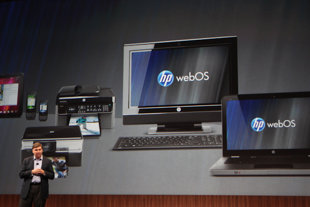
    The TouchPad is rumored to be bombing at retail, but that isn’t slowing down HP’s plans for webOS. Very similar to Google’s Android ambitions, HP is hoping to embed webOS in smart appliances, gadgets, cars, and absolutely anything else that has a screen. HP’s new head of webOS, Stephen DeWitt spoke with the WSJ (via CNET) concerning the potential of the company’s smartphone platform, noting that there’s an “enormous amount of interest” in webOS as a platform.?

    This stance mirror’s Google’s way to Android. At its Google I/O conference this year, Google revealed that it’s far working to integrate Android into smart appliances and a lot of other electronics. HP have been hinting at an expanded future for webOS because it revealed the TouchPad earlier this year. The pc maker plans to integrate webOS into all of its computers by 2012 and is actively taking a look at licensing partnerships.?

    “I happen to believe that WebOS is a uniquely outstanding operating system,” said HP CEO Leo Apotheker in the course of the D9 conference. “It’s not correct to believe that it is going to only be on HP devices. There are all sorts of different people that need to make whatever form of hardware they make and wish to connect them to the net.”

    We are fans of webOS, but when HP hopes to expand the platform, it’s going to ought to tackle the performance issues we’ve seen at the TouchPad and Palm Pre devices and work to drum up more interest from the developer community. Currently, webOS is fifth place competitor within the smartphone race, ranking behind Microsoft’s Windows Phone platform.?

  • Household wealth dipped in the spring

    WASHINGTON (AP) — Americans’ wealth declined this spring for the first time in a year, as stocks and home values fell. At the same time, corporations increased the size of their cash stockpiles.

    The combination could slow an already weak economy because it implies that families have less to spend and businesses are reluctant to expand.

    Household net worth dropped 0.3 percent to $58.5 trillion in the April-June quarter, according to the Federal Reserve’s Flow of Funds report released Friday. The decline followed three straight quarterly increases.

    The value of Americans’ stock portfolios fell 0.5 percent in the second quarter. Home values dropped 0.4 percent.

    Corporations held a record $2 trillion in cash at the end of June, an increase of 4.5 percent from the January-March quarter.

    Consumers are already struggling with high unemployment and meager pay raises.

    When people feel poorer, they spend less. That slows growth. Businesses then respond by cutting back on hiring and expansion plans. It can become a cycle.

    Net worth is expected to fall even further in the July-September quarter because stocks plunged in late July and early August.

    A key reason was the government said the economy barely grew in the first half of the year. Investors also reacted to lawmakers’ battle over raising the government’s borrowing limit and Standard & Poor’s downgrade of long-term U.S. debt.

    “August put a big dent in whatever confidence consumers had left,” said Greg McBride, senior financial analyst at Bankrate.com. That’s largely why retail sales were flat last month, he added.

    Overall, household wealth, which mostly consists of home equity, stock portfolios, and other savings, has risen 15 percent since the recession officially ended in June 2009.

    The increase is due almost entirely to one of the fastest bull markets in history. Stocks began to recover in the spring of 2009 and doubled in value by April of this year, according to the S&P 500 index.

    But Americans’ wealth has taken a hit since the second quarter, which was the period covered by the Fed report. The S&P index has tumbled 11 percent since its April 29 peak, and 8 percent since the end of the quarter. That likely means an even larger drop in household net worth in the July-September quarter.

    Stock portfolios make up about 15 percent of Americans’ wealth. That’s less than housing but ahead of bank deposits, according to the Fed’s report.

    An estimated 88 percent of people with 401(k) retirement savings plans now have more money in their accounts than they did at the 2007 market top, according to Jack VanDerhei of the Employee Benefit Research Institute in Washington. That’s largely because of workers’ continued contributions to their accounts over the past four years.

    Eighty percent of stocks belong to the richest 10 percent of Americans, who also account for a disproportionate amount of consumer spending. The richest 20 percent represent about 40 percent of consumer spending.

    The likely drop in wealth comes at the same time that incomes are stagnating, particularly for middle-income households. Average household income, adjust for inflation, fell 6.4 percent last year from 2007, the year before the recession, the Census Bureau said earlier this week.

    Americans also have less equity in their homes. The average homeowner has just 38.6 percent equity, down from 61 percent a decade ago.

    Normally, home equity rises as you pay off a mortgage. But home values have fallen dramatically since the housing bubble burst in 2006. Many homeowners are losing equity even though the balance on their loan is getting smaller.

    Home equity plays a large part in how much money people feel like they have. If they are swamped by hefty mortgage payments, they’re less likely to spend freely. Home equity also serves as collateral for loans.

    The report found household debt declined at an annual rate of 0.6 percent from the previous quarter, helped by a big decline in mortgage debt, which has fallen for nine straight quarters.

    But the decline is deceiving. Mortgage debt is coming down because so many Americans are defaulting on payments and losing their homes to foreclosure, not just because people are paying off loans.

    Home prices are expected to keep falling until the number of foreclosures is reduced, companies start hiring in greater force, banks ease lending rules and more people believe it makes financial sense to buy a house. Economists say that’s unlikely to happen for at least another year.

    The Fed’s quarterly report documents wealth, debt and savings for corporations, governments and households. It covers most of the financial transactions that take place in the United State
  • The Wife Acceptance Factor (WAF)

    The acronym WAF has gradually crept into our lives. WAF stands for Wife Acceptance Factor. It’s usually used in relation to a high-tech piece of electronics and especially in when purchasing a home entertainment centre. More and more promotion experts are looking to the critical WAF (wife acceptance factor) of the product they’re selling. Studies repeatedly reveal that women make the closing selection on purchases – some studies say as high as 74% – on what make or model a family will purchase- or if they’re going to buy whatsoever.


    In fact, there has been a unexpected trend in the sale of televisions. Even though with the advent of high definition television and the better picture and sound quality of LCD televisions does play a huge role in the increase of televisions sales, industry insiders report that there is another element involved. The Wife Acceptance Factor. Women are now entering electronic stores to replace their existing television sets- they want to get rid of their bulky CRT TV’s and want the lighter sleeker design newer thin televisions have to offer. The good news for manufactures is that not only are women replacing the televisions in their living rooms- but they’re actually buying more- placing TV’s in rooms they never allowed them before, with small flat screens in kitchens, bedrooms and the home office.


    Although at first it only referred to the visual of an item- too big or too ugly, WAF can now mean “too” anything; too expensive or too frivolous or too hard to use. Most segments of the marketing world are now aware of WAF. You will hear WAF being used by new furniture and car salesmen- but never more than on the shop floor at an electronics store, when looking to buy a new stereo system or home entertainment centre. WAF is so powerful a factor in men’s buying patterns that men’s forums are bursting with WAF threads and discussions. Look at a forum for men’s toys and you will see thread after thread of discussions on the WAF of everything from motorcycles to their new home theatre.


    Wife Acceptance Factor is certainly altering the design and dynamics of our consumer goods. In the last 10 years the demand for sleekly built invisible electronics has sky rocketed. New homes have built in speakers concealed in ceilings and walls. Modern gardens can feature rock garden speakers and one-touch remote controls for a home theatre setup can now cost almost as much as a new television, all to make the spouse happy.

  • Why You Need A Home Theater


    Everyone wants to have amazing entertainment and thrill. Our day-to-day lives become too dull and boring as most of the day we’re working in front of a computer screen toggling between the windows and performing complicated work processes. To get away from the monotony of our day to day lives we indulge in a number of leisure activities like reading books, playing games or watching films and tv. We hardly have any time to relax and have fun; it can be also extremely difficult to save some time from our busy and sometimes busy schedules, and go to entertainment parks and theatres for getting some rejuvenation. If we have the right entertainment system at home then we wouldnt need to go to these places when seeking entertainment. Most people enjoy watching movies and tv programmes. This is one of the most common pass times for the majority of the population around the globe. People of all ages can enjoy a home theater system due to the vast variety of programming available.


    There is loads of fun to be had watching movies with exceptional picture quality and amazing sound effects. These gadgets promise incredible entertainment. Watching a movie in the relaxed and cosy confines of your home is definitely a nice idea for most. Calmly resting on your sofa, with a delicious meal and the ability to grab a cup of tea or coffee at ease. These systems can provide you with a perfect experience that is just like watching the movie in a cinema. When you have a family it can cost a small fortune each time you want to take everyone out to the cinema, but with a home theater system you can have that same amazing experience right in the comfort of your own home. These systems are designed to give you the incredible real time experience you get at the cinema with surround sound effects, amazing picture quality and if you choose the right film, an incredible performance.


    Each system is a collection of complex electronic units that together, can give an amazing combination of superb visuals and sounds. They usually include a high definition widescreen television, a high quality sound system with advanced speakers and DVD player or now a Blu Ray player. The sound system is enhanced by its high quality surround tweeters and woofers.


    Nowadays, a large variety of options are available for the television. You can have the latest LED 3D TV, if budget allows, a Plasma TV or flat screen LCD TV. You need a wonderful sound system which should contain at least 4 speakers for great sound effects. An amplifier is essential for the sound splitting with which the amazing surround sound effect can be created.  You need a DVD or Blu Ray player with which to play your movies etc. In the surround sound systems, the audio signal is split into a large number of channels and the discrete sound information is transmitted through different channels. This leads to amazing sound effects. The different speakers transmit different sounds giving you the largest selection of sounds from the lowest boom of an explosion to the highest note at an opera.

  • Ways To Save Energy In Your Household

    With going “green” being the new global mantra, home-owners are progressively switching to energy saving mechanisms to lower household expenses. Household electrical items and appliances are far more energy efficient than they have been generations ago. Even though, the sheer increase in the number of appliances and gadgets in use throughout the country mean that energy saving still remains a priority for the government. Bigger electrical gadgets and high speed processing computer systems demand more substantial levels of energy which will eat into your household finances.


    The Consumer Electronics Association (CEA) has outlined the following methods for property owners that can help them conserve power and financial savings.


    Use appliances with the Energy Star labels.


    Unplug mobile phone chargers once they have been fully charged.


    If your personal pc or laptop computers come equipped with energy conservation equipment, make full use of them. Refer to the owner’s manual to find out if the rest of electronic equipments in your house offer these kinds of energy saving features.


    Once you have finished watching a movie or playing a video game, be certain to switch off the television monitors and game consoles.


    Make certain to plug your tv sets and DVD players into power strips. Turn the power strips off once the gadgets are not in use especially over lengthy periods of time.


    You can find numerous new age automation products and services obtainable nowadays that make it possible for you to regulate heating, lighting and cooling from a central point in the house.


    Choose multi function gadgets rather than shopping for a single gadget for each and every function. Help save fuel by shopping and banking on line. Talk about part-time telecommuting as being a career option with your employer.